Apply to Gero-STARR
If you are in your first semester in the on-campus BSN program during the Fall of 2026, Gero-STARR is designed specifically for you.
This federally funded program provides enhanced training, academic and non-academic support, and financial stipends and scholarships to UND nursing students from North Dakota communities who are committed to increasing the nursing workforce across the state, especially in rural communities.
Gero-STARR is not an external scholarship — it is a competitive internal scholarship training program exclusively offered to UND pre-licensure nursing students.
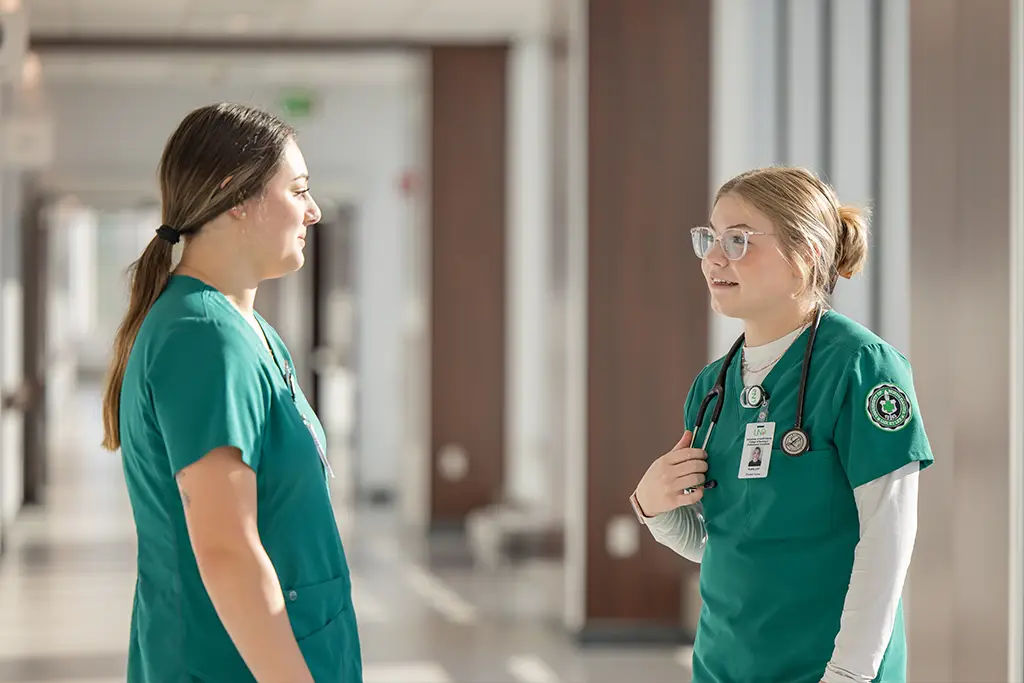
Why the Gero-STARR Program Matters to You as a Nursing Student
The Gero-STARR Program provides specialized training in the application of the 4Ms
framework of Age Friendly Care to improve care for older adults. While the approach
can be used to improve care for any patient population, there is strong national support
for the application of Age-Friendly Care across all settings for older adults.
Through this program, you will:
- Strengthen your clinical confidence and competence
- Gain specialized geriatric training in the application of the 4Ms of Age Friendly Care
- Build leadership skills applying evidence-based care in hospitals and long-term care
- Benefit from having a Nurse Mentor dedicated to the Gero-STARR Students
- Join a small, supportive learning community with administrative support
- Learn about the benefits of choosing a nursing position in a rural community
Intensive Age-Friendly Care Training
As a Gero-STARR Scholar, you will complete a 2-week immersive training course in May 2027 after completion of your Spring 2027 semester that includes classroom instruction, clinical simulation, precepted clinical experience in acute and long-term care, and integration of the nationally recognized 4Ms Framework. This training culminates in an Age-Friendly Care credential (“Badge”) that strengthens your professional résumé and prepares you for practice in rural acute and long-term care settings (and course credit).
Students also participate in monthly enrichment sessions throughout the academic year with Gero-STARR faculty members, guest presenters, and your cohort that may include topics related to rural nursing, the 4Ms of Age-Friendly Care, caring for older adults from rural or tribal communities, geriatric nutrition, and financial resources available for older adults.
Designed for Students from Rural North Dakota
Gero-STARR prioritizes UND nursing students who graduated from rural North Dakota high schools and meet educationally disadvantaged criteria.
To be considered Educationally Disadvantaged in North Dakota, you must meet criteria for A OR B. Students who do not meet criteria A or B will still be considered if room is available.
- Graduated from a high school in North Dakota considered rural by the Health Resources and Services Administration (HRSA) Rural Health Grants Eligibility Analyzer. To check, click the link on the analyzer and enter the name of high school and the zip code of the high school.
- Have/had no parents or legal guardians who completed a bachelor’s degree.
The goal is simple: Support UND students who understand rural communities and empower them to return as highly trained nurses.
Building Your Career — and North Dakota’s Workforce
In exchange for financial support and enhanced training, scholars agree to work in North Dakota as a nurse for at least one year after graduation in acute or long-term care.
This commitment allows you to:
- Launch your nursing career with purpose
- Gain meaningful early-career experience
- Contribute directly to improving care for older adults
- Strengthen healthcare access in rural communities
Eligibility
- Must be a U.S. citizen or permanent resident of the United States.
- Graduated from high school in North Dakota
- Current 1st Semester Nursing Student in the Fall 2026 Semester.
- This mentoring and training program is for students who have been accepted into the on-campus BSN nursing program at UND. You must have a minimum GPA of 3.0 or higher and be a full-time student.
Benefits
- Scholarships
- A monthly stipend for 12 months (2027).
- Designated Mentor, Advising, and Tutoring
- Student Support, Resources, and Advocacy
- Access to Gathering Space/Study Gero-STAR Space, the UND Northern Plains Center for Behavioral Research (NPCBR), Room 270
- Career planning and coaching
- Guidance focused on students achieving professional goals.
- Membership in a learning community with support from Gero-STARR team members
Requirements
- Agree to take a 2-week Gero-STARR training course at CNPD May 2027 after completion of your Spring Semester 2027, in Culturally Sensitive Age-Friendly Care Training in Acute & Long-term Care (this includes didactic, simulation, and clinical components). Gero-STARR students will earn the Age-Friendly Care credential ‘Badge’
- Sign a scholarship Agreement to work in acute care or long-term care in North Dakota as a nurse following graduation for 1 year.
- Agree to share contact information and respond to Gero-STARR surveys up to 4 years following graduation to facilitate required data collection and employment history tracking.
Application
Applications will open again on August 24, 2026, and close September 18, 2026.
Students will be notified by October 8, 2026, of acceptance.
Before you begin the application, please be prepared to complete demographic questions, answer three 100-word narrative responses to questions about your professional goals following graduation, and upload unofficial high school and college transcripts.
Follow-up and Notification
The Gero-STARR Selection Committee will notify applicants regarding the outcome of your application.
- Applicants will be notified by October 8 regarding selection or non-selection for the Gero-STARR program.
- Successful applicants must commit to and sign a Scholarship Agreement (see additional program requirements) before any benefits are initiated. All students receiving any financial aid must notify the financial aid office at UND if selected for the Gero-STARR program.
- Proof of citizenship or permanent residency within the U.S. is required before official acceptance.